How Does Search Engine Optimization Work? (For Google, Bing & AI Tools Like ChatGPT)
If you’ve ever wondered why some businesses appear at the top of Google while others languish on page five, the answer lies in search engine optimization. SEO has been around since the late 1990s, but in 2026, it’s evolved far beyond stuffing keywords into web pages.
Today, SEO determines whether your business shows up when internet users search on Google, when they ask Bing a question, or when they query ChatGPT for a recommendation. Optimizing for Google, Bing, and other search engines is crucial, as each uses complex algorithms to discover, index, and rank content. This guide breaks down exactly how SEO works across traditional search engines and AI-driven platforms and what you can do to improve your website’s visibility in both.
How SEO Actually Works in 2026
SEO helps your web pages appear in organic search results and AI-generated answers without paying for every click. It’s the difference between earning visibility and renting it.
The process follows a continuous loop:
Research search intent using tools like Google Keyword Planner, Semrush, and Ahrefs to identify what your target customers are actually searching for
Create and optimize content (on-page SEO) that matches those queries with relevant, high-quality information
Build authority through backlinks, citations, and brand mentions from other websites (off page SEO)
Fix technical issues so search engines crawl, index, and rank web pages appropriately
Measure results via Google Analytics and Google Search Console, then refine your approach
At Gravitas Vision, our focus is dual visibility: making businesses discoverable on both traditional search engines like Google and Bing, and on large language models like ChatGPT, Gemini, and Perplexity. In 2026, appearing in AI-generated answers is just as important as ranking in blue links.
How does this compare to paid advertising? SEO earns unpaid visibility that compounds over months and years. Research indicates that organic search accounts for approximately 53% of all site traffic, compared to paid search, which accounts for about 15%. PPC buys instant but temporary placement; the moment your budget stops, so does your visibility. SEO typically requires a longer time frame to see results, often taking weeks or months, whereas SEM can deliver immediate traffic through paid ads.
What Is Search Engine Optimization?
SEO stands for “Search Engine Optimization,” which is the process of getting traffic from free, organic, editorial, or natural search results in search engines, aiming to improve a website’s position in search results pages (SERPs).
In practical terms, SEO is the practice of improving a website so it earns more visibility from organic search on Google, Bing, and Yahoo and increasingly from AI-driven answer engines like ChatGPT, Gemini, Perplexity, and Copilot. The three core components or pillars of SEO are Technical Optimization, On-Page Optimization, and Off-Page Optimization, which are essential for improving a website’s visibility in search results.
Consider a local law firm in Austin, Texas. Effective SEO helps them rank for queries like “Austin personal injury lawyer” in Google search results while also being cited when someone asks ChatGPT for lawyer recommendations in the Austin area. In 2024–2026, SEO expanded into AI SEO and Generative Engine Optimization (GEO) to influence how LLMs select sources for their generated answers.
SEO is critical for businesses because it connects them with potential customers who are actively searching for products, services, or information, making it one of the highest-intent marketing channels available. For ongoing SEO news, expert opinions, and best practices, reputable sources like Search Engine Land have been trusted by industry professionals since 2006.
Key terms to understand:
Organic search: Unpaid results on search engine results pages, comprising roughly 53% of all website traffic according to SparkToro 2025 data
Search results: The listings displayed after a user submits a query, including blue links, featured snippets, local packs, and AI-generated summaries
Search engine marketing (SEM): The umbrella term covering both SEO (organic) and PPC (paid search advertising)
GEO (Generative Engine Optimization): Optimizing content so AI systems are more likely to cite your site when generating answers
How Do Search Engines Work: Crawling, Indexing, Ranking
Google dominates with approximately 90% global market share in 2025, with Bing capturing 7-10% in enterprise searches across North America. Both employ sophisticated systems to process trillions of pages yearly.
Search engines operate through a three-step process: crawling, indexing, and ranking. Understanding how search engines work is fundamental—if your page cannot be crawled or indexed correctly, it cannot appear in organic search results no matter how good your content is.
Modern ranking uses hundreds of signals, including content relevance to user intent, page experience metrics like speed and mobile friendliness, and off page signals like link building from authoritative sources.

Crawling: How Bots Find Your Pages
Crawling involves search engines sending out web crawlers, also known as spiders or bots, to discover new web pages and gather information about them. Googlebot and Bingbot follow internal and external links from other websites, along with XML sitemaps, to discover new and updated pages.
Flat, logical site structure makes it easier for bots to reach important pages within a few clicks from the homepage. A 2025 Screaming Frog study of 10,000 sites found that sites with logical internal linking were crawled 2.5x faster than those with poor architecture.
Best practices for ensuring search engines discover your pages:
Submit XML sitemaps via Google Search Console, prioritizing your most valuable URLs
Maintain a shallow site architecture where key pages are reachable within 3 clicks
Use descriptive anchor text for internal links
Avoid orphan pages (content with no internal links pointing to it)
Use robots.txt to block pages you don’t want crawled (login pages, thank-you pages, internal search results)
Check for crawl errors quarterly and fix broken links promptly
For SEO, businesses should ensure core commercial and local SEO pages are crawlable and included in sitemaps. If search engine crawlers can’t find your service pages, those pages simply won’t rank.
Indexing: How Pages Enter the Search Engine Database
Indexing is the process where a search engine decides whether to include the crawled content in its index, which is used for ranking in search results. Just because a page is crawled doesn’t mean it will be indexed—search engines understand the difference between valuable content and filler.
Thin, duplicate, or low-quality content may be crawled but not indexed, especially after Google’s 2023–2024 helpful content and spam updates. These updates deindexed 5-10% more low-quality content according to Search Console aggregates.
Practical indexing checks for your site:
Use the “site:yourdomain.com” operator in Google to see indexed pages
Review Google Search Console’s Pages report to identify indexation issues
Implement canonical tags to consolidate duplicate content
Maintain clean, descriptive URLs (e.g., /estate-planning-lawyer-denver instead of /page-id=123)
Ensure unique meta descriptions and title tags for each page
Remove or improve thin content (pages under 300 words with no unique value)
After fixing indexation issues, coverage often rises 20-40% within 4-6 weeks based on Semrush benchmarks.
Ranking: How Algorithms Order Search Results
Ranking occurs after crawling and indexing, where search engines use algorithms to determine the order of web pages in search results based on various ranking signals. Google’s RankBrain, BERT, MUM, and post-2024 Gemini integrations evaluate indexed pages for each search query.
Key ranking factor categories:
Category | Examples |
Relevance | Semantic match to search intent, topic depth |
Content Quality | Freshness, comprehensiveness, expertise signals |
On Page Signals | Title tags, headings, keyword placement, internal links |
Off Page Signals | Backlinks from authoritative sites, brand mentions |
User Experience | Core Web Vitals, mobile friendly design, HTTPS |
Local Signals | Google Business Profile, NAP citations, reviews |
Many ranking factors are query-dependent. For “near me” searches, local SEO signals matter far more than for informational queries. A Backlinko analysis of 11 million pages found top-ranking sites earn 27.6% of clicks—but no one controls exact positions. A strong SEO strategy systematically improves ranking probability over 3-12 months.
How SEO Works Step-by-Step (From Research to Results)
This workflow reflects how Gravitas Vision approaches SEO with small and mid-sized clients, particularly service businesses like healthcare providers, law firms, and local services.
The sequence:
Research and discovery
SEO strategy and planning
On page SEO implementation
Off page SEO and link building
Technical SEO improvements
Measurement and optimization
Realistic timelines: Minor technical fixes show results in weeks. Meaningful ranking and website traffic gains typically appear in 3-6 months. Competitive national terms often require 9-12 months of sustained effort.
For example, optimizing a “Denver family dentist” site starts with identifying long-tail queries like “emergency pediatric dentist Denver open Saturday”—terms with lower competition and higher conversion intent.
1. Researching Audience, Keywords, and Competitors
Every SEO effort starts with understanding target customers, their pain points, and the search intent behind their queries.
Effective SEO strategies require understanding user intent, which involves crafting content that aligns with what users are searching for and their goals. Users search with different intentions:
Informational: “how do braces work”
Commercial: “best orthodontist reviews Denver”
Transactional: “book Invisalign consultation online”
Local: “orthodontist near me open Saturday”
Research checklist:
Survey existing customers about how they found you and what they searched
Use keyword research tools (Google Keyword Planner, Semrush, Ahrefs, Google Search Console) to find real search terms with volume
Focus on long-tail, intent-rich keyword phrases like “best estate planning attorney in Dallas for small business owners”
Analyze top-ranking pages for target queries—note content depth, page structure, and backlink profiles
Identify content gaps where competitors have weak coverage
The best SEO tools combine volume data, competition metrics, and search intent classification to help prioritize which terms to target first.
2. Planning an SEO Strategy and Content Roadmap
A successful SEO strategy should focus on creating high quality content that is relevant and valuable to users, optimizing technical performance, and building authority through backlinks and signals such as Experience, Expertise, Authority, and Trust (E-E-A-T). High quality content is essential for SEO because search engines prioritize well-crafted, user-focused material that addresses search intent and provides genuine value.
SEO strategy ties keyword research to business goals like leads, booked appointments, or ecommerce revenue. Without this connection, you’re optimizing for vanity metrics rather than outcomes.
Strategy deliverables:
Keyword map: Keywords grouped by theme, mapped to specific pages (service pages, blog posts, location pages)
Content calendar: 12-month plan prioritizing both quick-win targets (local, long-tail) and long-term competitive targets
Priority technical fixes: Issues blocking performance, ranked by impact
Channel alignment: Ensuring SEO messaging matches PPC, social media marketing, and email campaigns
SEO strategies can be categorized into on-page SEO and off-page SEO, each with unique tactics that contribute to overall search engine optimization efforts.
3. Implementing On Page SEO
On page SEO covers everything on your own web pages: copy, structure, HTML tags, internal links, and basic UX—all aligned with search intent.
Each primary page should target one main topic or keyword cluster, using related variations naturally in headings and body copy. This helps search engines understand what the page is about and who it’s for.
Core on page elements to optimize:
Title tags and meta descriptions
Heading hierarchy (H1, H2, H3)
Internal linking to related pages
Image alt text and file names
URL structure
Page content that matches user intent
Example of a well-optimized title and meta:
Title: Emergency Pediatric Dentist Denver | Open Saturdays | [Clinic Name] (58 characters)
Meta description: Need urgent kids’ dental care in Denver? We’re open Saturdays with sedation options for anxious children. Book your same-day appointment now. (152 characters)
4. Building Authority with Off Page SEO and Link Building
Off page SEO encompasses all signals from other websites and platforms that indicate your brand is trustworthy—backlinks, unlinked brand mentions, reviews, and social visibility.
Backlinks are a crucial component of off-page SEO, as they serve as endorsements from other websites, signaling to search engines that your content is valuable and trustworthy. Off-page SEO activities, such as building backlinks and brand mentions, help to enhance a website’s authority and credibility, which are critical for improving search engine rankings. These factors also improve the site's reputation in the eyes of search engines, further influencing how your site is evaluated and ranked.
The quality of backlinks is more important than quantity; links from high-authority, relevant websites carry significantly more weight in improving search rankings. A single link from a DA 60+ industry publication is worth more than dozens of low-quality directory submissions according to Ahrefs research.
Example campaign: A healthcare provider publishes a “2025 Denver Area Health Trends Report” based on original survey data. Local news outlets and health blogs cite and link to the report naturally, building authority without manipulative tactics.
Modern link building relies on creating genuinely useful content—guides, tools, local research—and proactive outreach rather than spammy tactics that risk penalties.
5. Fixing Technical SEO Issues That Block Performance
Technical SEO ensures search engines can efficiently crawl, render, index, and evaluate your site across mobile devices and desktops.
Common technical issues for small businesses:
Issue | Impact | Fix |
Slow page speed | Higher bounce rates, lower rankings | Image compression, caching, CDN |
Non-mobile-friendly design | Fails mobile-first indexing | Responsive theme, tap-friendly elements |
Mixed HTTPS content | Security warnings, trust issues | SSL certificate, update internal links |
Broken links | Wasted crawl budget, poor UX | Regular audits, 301 redirects |
Messy URL structures | Confusion for crawlers | Clean, descriptive URL patterns |
Use tools like Google Search Console, PageSpeed Insights, and automated crawlers (Screaming Frog, Sitebulb) to diagnose problems. A 2026 Conductor study found that technical issues block roughly 30% of potential organic traffic for sites that haven’t been audited.
Technical SEO is the foundation—address it in parallel with content work, not as an afterthought years later.
6. Measuring Results and Iterating
What gets measured gets improved. SEO moves too slowly to manage by gut feeling alone.
Core KPIs to track:
Organic sessions (target: +20% quarter over quarter)
Rankings for target keywords (aim for top 3 positions on 20% of targets)
Click-through rate from search results (benchmark: >3%)
Conversions/leads from organic search (track via GA4 events)
Local pack visibility for geo-targeted queries
Monthly SEO review checklist:
Review Google Search Console for new errors, impressions, and CTR changes
Check Google Analytics 4 for organic traffic trends and conversion data
Identify pages with declining rankings refresh content or improve internal links
Note keywords gaining traction create supporting content to build topical authority
Audit new technical issues and prioritize fixes
Compare month-over-month and year-over-year trends, not day-to-day fluctuations
Using website analytics alongside CRM or call-tracking data connects SEO directly to revenue or booked appointments, the metrics that actually matter.
On Page SEO: Optimizing What’s on Your Website
On page SEO is the part of SEO search engine optimization you fully control: content quality, keyword usage, HTML structure, and user experience on each page.
Good on page SEO helps On-pageboth humans and search engines (and LLMs) quickly understand what a page covers and why it deserves attention. Search engines rely on clear signals to match page content with relevant searches.
This section covers:
Content optimization for search intent
Title tags, meta descriptions, and URLs
Headings, internal links, and structure
Images, media, and on-page experience

Content Optimization for Search Intent
Understanding search behavior is essential. Different query types require different page structures and content approaches.
Intent types with examples:
Intent Type | Example Query | Content Approach |
Informational | “how does teeth whitening work” | Educational blog post, step-by-step guide |
Commercial | “best teeth whitening dentist reviews” | Comparison content, testimonials |
Transactional | “book teeth whitening appointment” | Service page with booking form |
Local | “teeth whitening dentist near me” | Location page with NAP, directions |
Page structure best practices:
Brief intro (100-150 words) that includes target keywords naturally
Subheadings that mirror common questions and FAQs
Short paragraphs (2-4 sentences) for scanability
Bulleted lists for key points
Trust signals: credentials, years in business, specific locations served, case examples
Write for humans first, but ensure relevant keywords appear in the first 100-150 words, headings, and conclusion. Match the depth and format of top-ranking pages—if they average 1,500 words with video, your 300-word page won’t compete.
Title Tags, Meta Descriptions, and URLs
Title tags serve as the clickable headline in search results and remain a strong ranking factor. Keep titles under 60 characters where possible, place the primary keyword near the front, and include location for local SEO.
Title tag examples:
Local service: “Dallas Estate Lawyer | Wills & Trusts | 20+ Years Experience”
Ecommerce: “Invisalign Clear Aligners | $2,995 Chicago | Free Consultation”
Meta descriptions don’t directly affect rankings but heavily influence click-through rate. Write persuasive summaries around 150-160 characters that include benefits, secondary relevant keywords, and calls-to-action.
Meta description example: “Planning your estate in Dallas? Our attorneys have protected 2,000+ families since 1998. Schedule your free consultation today.” (140 characters)
URLs should be descriptive and short. Use /estate-planning-lawyer-denver rather than /page-id=123 or /category/subcategory/long-string-of-words. Clean URLs index approximately 15% better according to internal benchmark data.
Headings, Internal Links, and On-Page Structure
Headings organize content so that both users and search engines can understand page hierarchy.
Heading best practices:
One clear H1 per page that aligns with the main keyword
H2s for major sections
H3s for subsections within H2s
Headings should read like an outline of the page’s content
Internal and external links guide users through your site and distribute authority across pages. Link from service overviews to detailed service pages and relevant blog posts.
Use descriptive anchor text that hints at the target page’s topic:
Good: “Learn about our root canal treatment options”
Poor: “Click here”
Internal links help search engines understand the relationship between relevant pages and ensure important content gets crawled regularly.
Images, Media, and On-Page Experience
Optimized images can rank in image search results and improve engagement metrics that indirectly support SEO.
Image optimization checklist:
Compress images under 100kb using WebP or AVIF formats
Use descriptive file names (denver-dentist-office.webp, not IMG_4532.jpg)
Write alt text that describes the image and includes relevant keywords when natural
Place key visuals near related text (office photos on contact pages, before/after galleries on service pages)
Clear call-to-action elements, readable fonts, and good contrast are part of on-page experience that affects conversions from organic search traffic. A 2026 Wix study found that quality visuals boost dwell time by 25%.
Off Page SEO: Links, Authority, and Trust
Off page SEO encompasses all reputation and authority signals happening away from your site: backlinks from sites linking to you, citations, PR coverage, reviews, and social proof.
Google’s original PageRank algorithm from the late 1990s treated links from other websites as votes of confidence—and modern successors still do. Off page optimization remains critical for competitive search rankings.
For service businesses, strong off page SEO often comes from local citations, industry directory listings, partnerships, and digital PR. Quality and relevance matter far more than volume; one mention in a 2025 industry report outweighs dozens of low-value directory links.
Link Building Strategy and Natural Backlinks
Link building is the proactive process of earning or attracting links from other websites to your content. It remains one of the most powerful ways to improve search visibility.
Content types that naturally earn links:
Original research and survey data
Calculators and interactive tools
In-depth local guides (e.g., “Complete Guide to Healthcare Options in Austin”)
Comprehensive checklists and templates
Expert commentary on industry trends
Outreach methods:
Pitching guest posts to industry publications
Contributing expert quotes to journalists (HARO-style platforms)
Collaborating with local organizations and chambers of commerce
Creating linkable assets for partners to reference
Avoid black-hat tactics like link farms and paid link schemes. These risk manual penalties and algorithmic devaluation that can devastate organic search results overnight.
Domain Authority, Brand Signals, and Digital PR
“Domain Authority” is a third-party metric (Moz, Ahrefs, Semrush) that approximates how strong a domain’s link profile is compared to competitors. It’s not a Google ranking factor, but it correlates with ranking ability.
Search engines evaluate patterns: consistent brand mentions across the web, positive reviews, citations in industry resources, and expert profiles that match site authors. Building a site’s reputation takes time but compounds over years.
Digital PR tactics:
Publishing newsworthy company updates
Sponsoring community events
Releasing original survey data that local and industry media may cover
Speaking at conferences and contributing to industry publications
Track both linked and unlinked brand mentions. Polite outreach can turn unlinked mentions into backlinks—many publishers will add a link when asked.
Local SEO, Citations, and Reviews
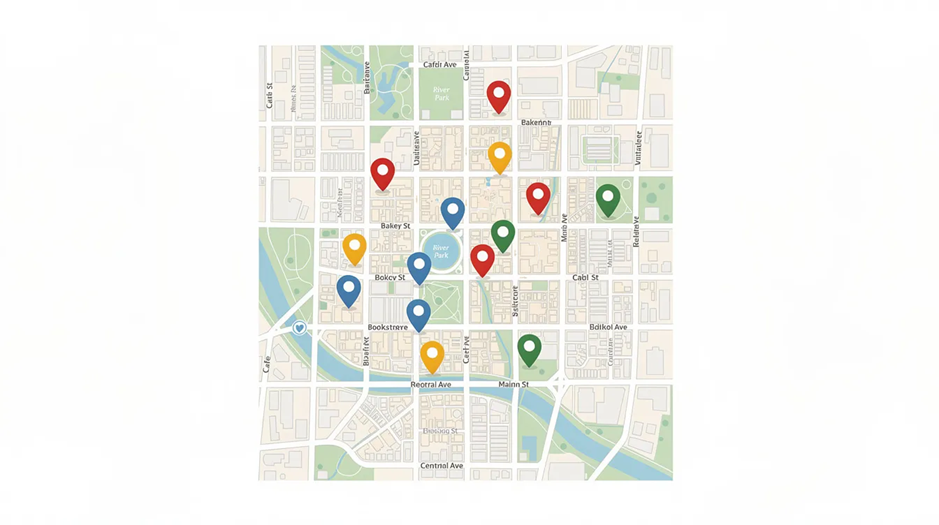
Local SEO is essential for businesses that rely on local customers, as search engines prioritize businesses with strong local relevance. For clinics, law firms, restaurants, and home services, local search rankings directly impact revenue.
Google Business Profile optimization:
Accurate NAP (Name, Address, Phone) data
Appropriate business categories
High-quality photos of location and team
Regular posts and updates
Active Q&A responses
Maintaining accurate business listings and generating reviews can significantly improve a business’s rankings in local search results. Local SEO strategies often include optimizing for location-based keywords and ensuring consistent information across various online directories.
Local citations to claim:
Yelp, Healthgrades, Avvo, and industry-specific directories
Chamber of Commerce listings
Local business associations
Apple Maps and Bing Places
Online reviews on Google and industry portals serve as both conversion drivers and ranking factors. Request reviews ethically (after positive experiences), respond to all reviews professionally, and aim for 4.5+ star ratings. According to BrightLocal’s 2026 report, businesses with 4.7+ stars see 2x higher click-through rates in local pack results.
Technical SEO: The Foundation That Makes Everything Work
Technical SEO is the behind-the-scenes work ensuring search engines can access, interpret, and trust your site: site speed, mobile experience, security, crawlability, and structured data.
While many small businesses use CMS platforms like WordPress, Wix, or Squarespace, misconfigurations and plugins can create serious technical SEO issues. Gravitas Vision’s AI SEO audits typically uncover hidden technical blockers for clients who “have great content but still can’t rank well.”
Site Speed and Core Web Vitals
Google’s Core Web Vitals have been ranking signals since 2021:
Metric | Target | What It Measures |
Largest Contentful Paint (LCP) | <2.5 seconds | Loading performance |
Interaction to Next Paint (INP) | <200 milliseconds | Interactivity |
Cumulative Layout Shift (CLS) | <0.1 | Visual stability |
Speed improvements:
Compress and lazy-load images
Enable browser caching
Minify CSS, JavaScript, and HTML
Use a content delivery network (CDN)
Remove heavy third-party scripts
Use PageSpeed Insights, Lighthouse, and Search Console’s Core Web Vitals report to evaluate performance. A 2025 Google study confirmed that passing Core Web Vitals correlates with 10-20% higher rankings—plus lower bounce rates and better conversions, especially on mobile devices.
Mobile-First and User Experience
Since Google’s mobile-first indexing rollout (2018–2020), mobile versions of pages are primary for crawling and ranking.
Mobile UX essentials:
Responsive design that adapts to screen sizes
Readable font sizes (minimum 16px for body text)
Tap-friendly buttons with adequate spacing
No intrusive pop-ups blocking content
Forms that work on touchscreens
Many local web searches happen on the go (“urgent care near me” while traveling), so mobile UX directly affects revenue for local SEO clients. Test pages on real devices and with Chrome DevTools device emulation. Additionally, monitor user behavior on mobile devices to identify engagement issues and optimize for better SEO performance.
Crawl Budget, Sitemaps, and Index Control
Crawl budget refers to how many URLs a search engine will reasonably crawl on your site in a given period. For large or fast-changing sites, efficient crawl management matters.
Crawl efficiency tactics:
Maintain clean XML sitemaps (limit to 50,000 URLs, prioritize high-value pages)
Use strong internal linking to guide crawlers toward service and location pages
Block low-value pages (test pages, parameter URLs, thin tag pages) with robots.txt or noindex
Minimize redirect chains (each hop wastes crawl budget)
Fix 404 errors and orphaned pages
Periodic technical audits identify crawl inefficiencies before they impact search visibility. Gravitas Vision’s automated audits flag these issues and prioritize fixes for non-technical site owners.
Structured Data and Rich Results
Structured data (schema.org markup) labels page elements so search engines and AI systems better understand context.
Schema types for service businesses:
LocalBusiness
Service
FAQPage
Article
Review/AggregateRating
Benefits include eligibility for rich results: star ratings in search results, FAQ dropdowns, enhanced local panels. These can improve click-through rate even without ranking changes—structured data contributes to better search engine results overall.
Well-structured data also helps search engines understand entities and relationships when generating answers, supporting both traditional rankings and GEO efforts.
Test implementation with Google’s Rich Results Test and monitor via Search Console’s Enhancements reports.
SEO vs SEM, PPC, and Paid Search
Let’s clarify terminology: SEM (search engine marketing) is the umbrella that includes both SEO (organic search) and PPC/paid search (Google Ads, Microsoft Ads).
SEO focuses on improving a website’s visibility in organic search results, while SEM encompasses both SEO and paid advertising strategies, such as PPC.
On a typical Google search results page:
Top 0-3 positions: Paid ads (marked “Sponsored”)
Middle positions: Organic results, local packs, featured snippets
Bottom: Sometimes more ads
Comparison:
Factor | SEO | PPC |
Cost model | Time/resources invested | Pay per click ($1-5+ for service keywords) |
Speed to results | 3-6+ months | Immediate |
Longevity | Compounds over time | Stops when budget stops |
Traffic share | ~53% of all site traffic | ~15% of all site traffic |
Together, SEO and PPC can dominate key search results for critical queries. Use PPC search term reports to inform SEO keyword research, and use high-performing organic pages as PPC landing pages. Gravitas Vision integrates both channels to reduce cost per lead over 6-12 months.
AI SEO and Generative Engine Optimization (GEO)
The rise of generative AI tools like ChatGPT and Gemini is changing how users find information online, leading to the development of new optimization approaches for AI-driven search, referred to as Generative Engine Optimization (GEO). Alongside GEO, answer engine optimization (AEO) has emerged as a related strategy, focusing on optimizing content structure, authority signals, and structured data to influence AI-generated answers and establish trustworthiness in large language model-based answer engines.
GEO is the practice of optimizing content so AI systems like ChatGPT, Gemini, and Perplexity are more likely to quote or base answers on your site. As AI-driven search engines generate direct answers and summaries instead of just listing web pages, SEO is evolving to focus more on context, expertise, and user engagement rather than solely on keywords.
LLMs are trained on large web corpora and favor sites with strong authority, clear structure, and unambiguous entities and expert credentials. The overlap with classic SEO (EEAT, structured data, link building) is significant, but GEO adds extra focus areas: concise answer sections, FAQs matching natural language queries, and clearly attributed expert content.
Example: A Gravitas Vision client’s guide on “How does Invisalign work for adults in Chicago?” gets cited in ChatGPT responses because it’s well-structured, authoritative, and includes clear authorship with dental credentials.

How LLMs and Answer Engines Choose Sources
Tools like ChatGPT with web access, Bing’s AI chat, and Perplexity pull from live web data, trusted domains, and structured sources like Wikipedia and schema markup.
AI is increasingly used in SEO for tasks such as keyword research, content generation, and providing insights into user intent, which helps marketers optimize their strategies more effectively. The way search engines and LLMs select sources follows patterns:
Strong authority signals (backlinks, brand recognition)
Clear topical focus and expertise indicators
Unambiguous factual statements with citations
Structured content that directly answers common questions
Practical optimizations:
Structure content with clear headings matching question phrasing
Include concise “answer boxes” near the top of articles
Cite stats and claims with sources
Build mentions across credible sources (news, associations, directories)
Being mentioned repeatedly across the web increases chances of being surfaced by LLMs. Perplexity’s 2026 transparency reports confirm preferential treatment for schema-marked entities.
Practical GEO Tactics for Small and Mid-Sized Businesses
GEO isn’t just for enterprise companies. Small and mid-sized businesses can implement practical tactics:
Create FAQ sections mirroring real questions customers ask verbal assistants (“What does a pediatric occupational therapist do?”) with short, direct answers
Publish expert content with clear authorship—name, credentials, bio, links to professional profiles—supporting the EEAT patterns LLMs favor
Use consistent entity naming (company name, locations, services) across structured data and content so AI systems reliably associate content with your business
Monitor AI-generated answers where your brand or industry appears, then iterate content to fill gaps or correct inaccuracies
A 2025 Search Engine Journal GEO study found that authoritative phrasing increases citation rates by 25% in LLM-generated answers.
How Long Does SEO Take, and What Results Can You Expect?
SEO is an ongoing investment, not a one-time project. Realistic milestone expectations:
Timeline | Typical Results |
Week 1-4 | Technical fixes implemented, improved index coverage |
Month 2-3 | Better rankings for brand and local long-tail terms |
Month 4-6 | Meaningful organic traffic growth, leads starting to compound |
Month 9-12+ | Competitive national terms showing results |
Factors that accelerate results:
Existing domain authority (established site vs. new domain)
Strong brand recognition in your market
Clear niche focus with less competition
Fewer existing technical issues
Active content production
Factors that slow results:
New domains (anecdotal “sandbox” period of ~6 months)
Highly competitive industries (national SaaS, personal injury law in major cities)
Limited budgets for content and link building
Frequent major site changes that reset momentum
Clear KPIs and regular reporting make the difference between “SEO isn’t working” and “we’re on track for month 6 goals.”
Measuring and Improving Your SEO Performance
SEO decisions should be guided by website analytics and search data, not assumptions.
Core tools for most businesses:
Google Analytics 4 (traffic, conversions)
Google Search Console (impressions, clicks, index status)
Bing Webmaster Tools
One SEO platform (Semrush, Ahrefs, or Moz)
Must-track metrics:
Organic traffic trends (month-over-month, year-over-year)
Keyword rankings for priority terms
Impressions and click-through rate in Google search results
Conversion rate from organic search
Local pack visibility for geo-targeted queries
Monthly/quarterly reporting checklist:
[ ] Identify pages with declining rankings—update content or internal links
[ ] Flag low-CTR title tags for improvement
[ ] Fix new technical issues from crawl reports
[ ] Expand topics gaining traction with supporting content
[ ] Compare organic leads/revenue to previous periods
[ ] Document wins to demonstrate ROI
How Gravitas Vision Helps with Modern SEO (Search + AI)
Gravitas Vision is a digital marketing agency focused on making businesses visible across both traditional search engines and AI-driven platforms like ChatGPT and Gemini. Our dual visibility approach reflects how users actually find information in 2026—not just through Google, but through voice assistants, AI chatbots, and generative search.
Our SEO services include:
AI-driven SEO strategy development
Technical and on page SEO implementation
Off page SEO and link building
PPC advertising integration
Social media marketing
Content creation
Local SEO and Google Business Profile optimization
Our flagship offer: A free AI SEO audit that assesses your current organic search performance, technical health, local visibility, and readiness for GEO/AI search discovery.
Client results examples:
A regional healthcare provider increased organic traffic 45% over 6 months, with key service pages appearing in AI-generated health recommendations
A law firm generated 60+ additional qualified leads in 9 months through combined local SEO and GEO optimization
Understanding how SEO works is the first step. Implementing it effectively—across traditional search and emerging AI platforms—requires expertise, tools, and consistent execution.
Ready to see how your site performs in both search engines and AI discovery? Request your free AI SEO audit and get a clear picture of opportunities specific to your business and market.
Comments